LEFT VENTRICLE
In-Depth AR Atlas Available
Read the comprehensive anatomy description with AR illustrations and videos
Read AR Atlas →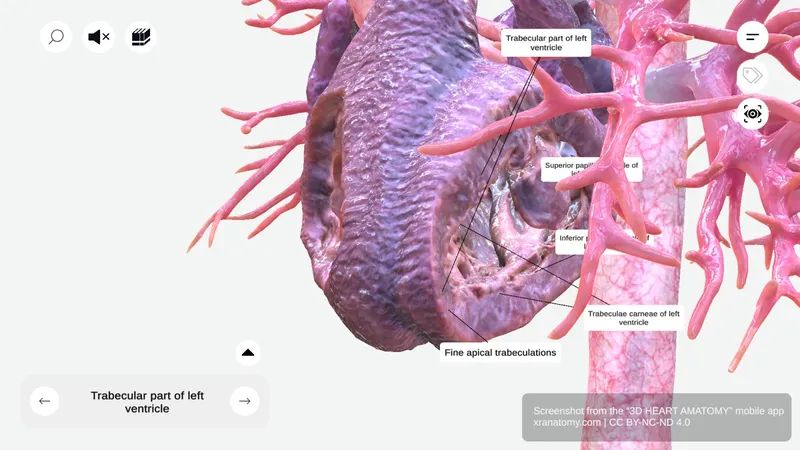
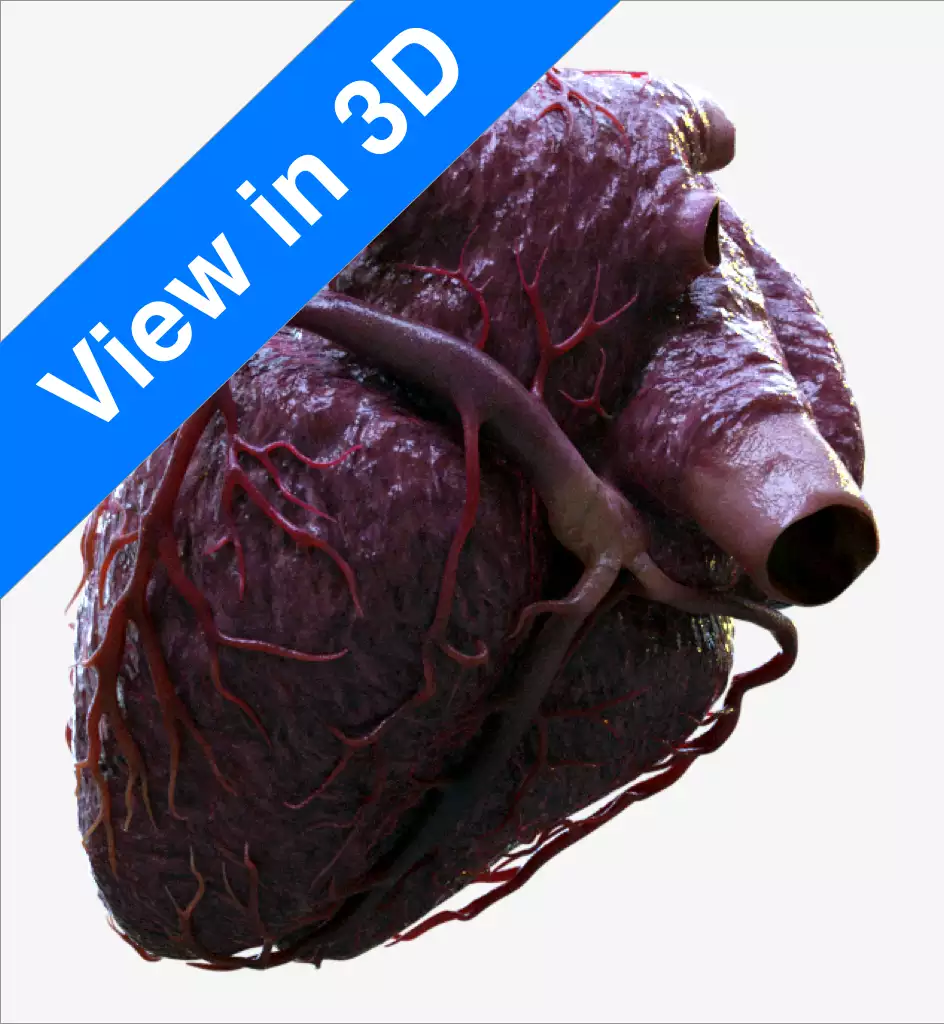
Left Ventricle - Trabecular Part, Preview from the app.
WHY THIS MATTERS
The left ventricle pumps oxygenated blood to your entire body, generating the highest pressure of any cardiac chamber. Understanding its inlet, trabecular architecture, papillary muscles, and chordae tendineae helps you see how your heart maintains efficient, unidirectional blood flow into systemic circulation.
LEFT VENTRICLE
The left ventricle is one of four cardiac chambers. It pumps oxygenated blood to your entire body. It receives oxygen-rich blood from your left atrium via the mitral valve and generates high pressure for your systemic circulation.
Position
The left ventricle sits primarily behind the right ventricle when viewed anteriorly. It forms the cardiac apex and the left border of your heart.
INLET OF LEFT VENTRICLE
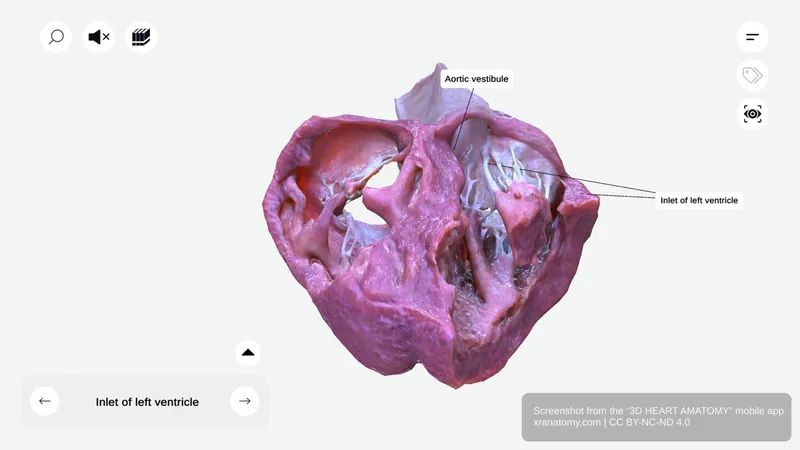
Inlet of Left Ventricle, Preview from the app.
The inlet of the left ventricle is the region where blood enters from your left atrium. It includes the inlet itself, guarded by the mitral valve, and the smooth-walled aortic vestibule leading up to the aortic valve.
Mitral Valve at the Inlet
The inlet is guarded by the mitral valve, also called the left atrioventricular valve. This valve ensures unidirectional blood flow and prevents backflow during ventricular contraction.
Aortic Vestibule
The aortic vestibule is a smooth-walled portion of the left ventricle located below the aortic orifice. It leads up to the aortic valve and streamlines blood flow from your ventricle into your aorta. This smooth region reduces turbulence and enhances the efficiency of blood ejection into your systemic circulation.
TRABECULAR PART OF LEFT VENTRICLE
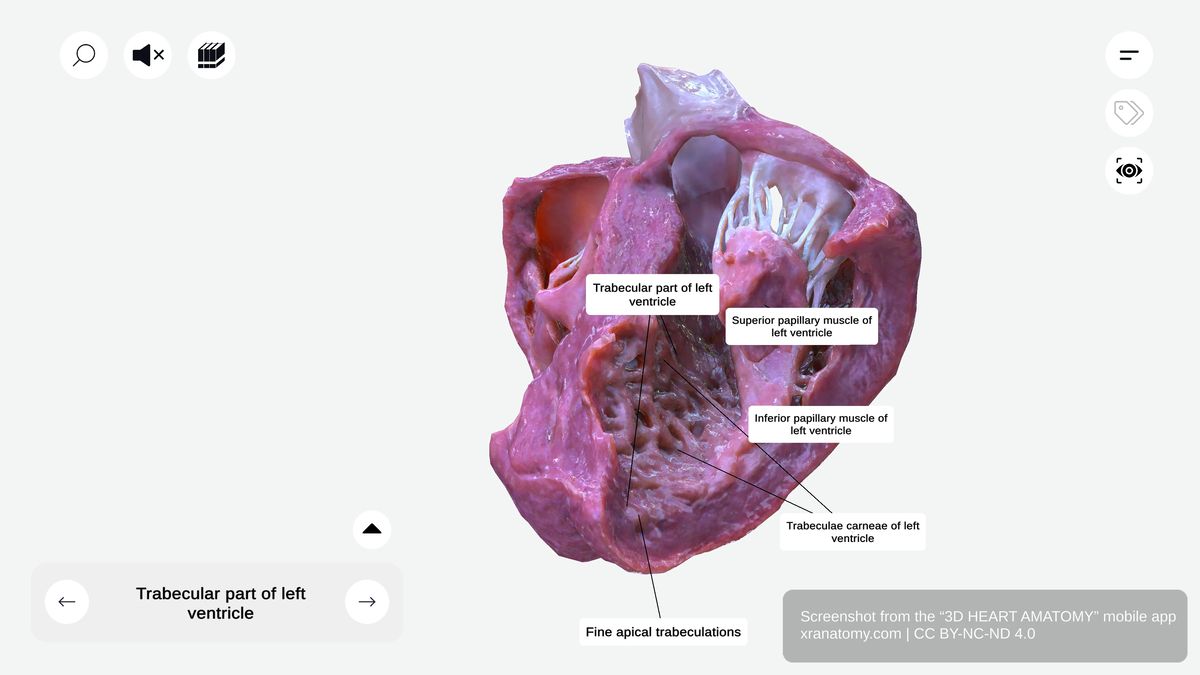
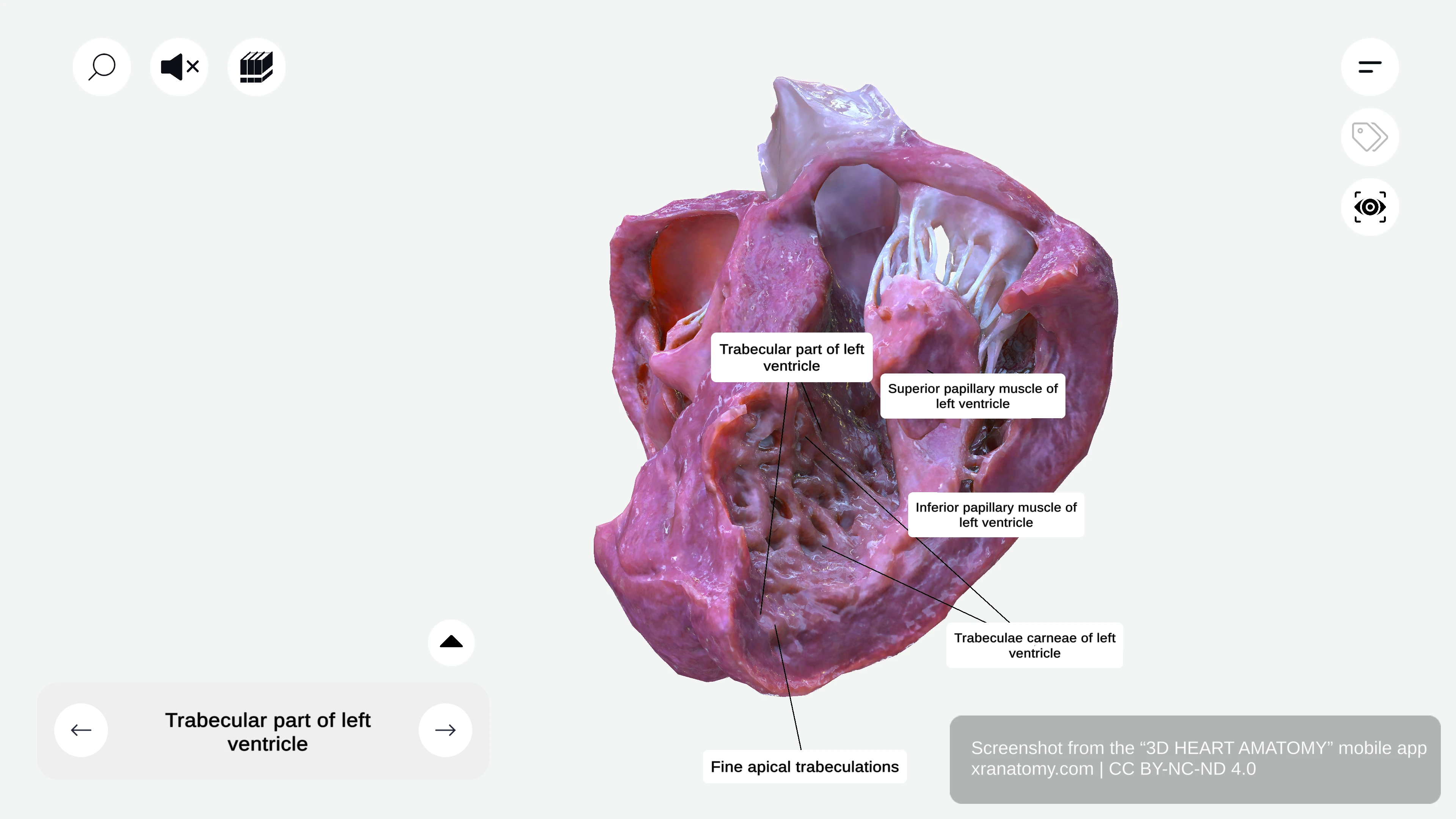
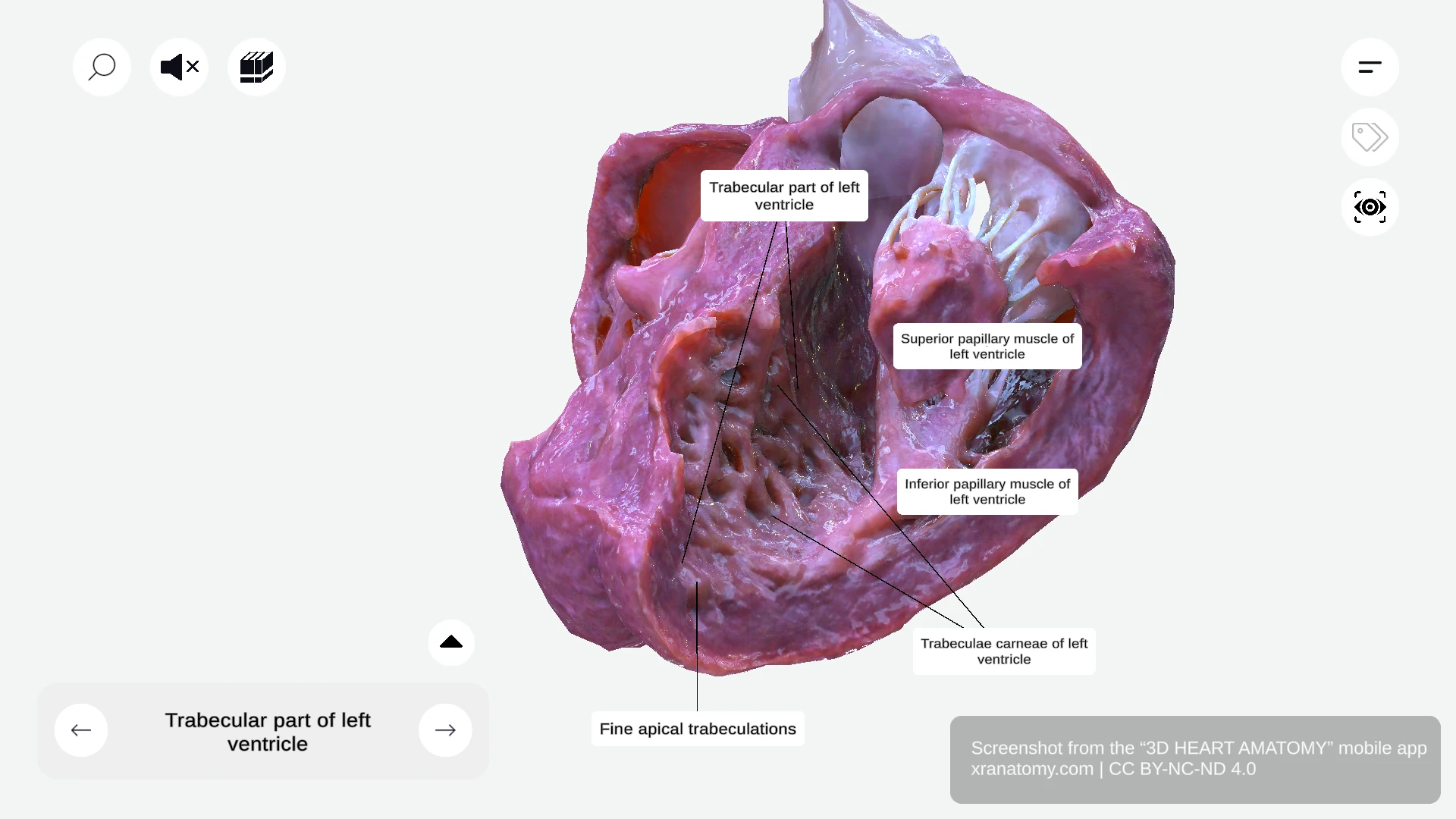
The trabecular part consists of inner ventricular walls with muscular ridges that extend toward the left ventricular apex. Its key features are the trabeculae carneae, a network of muscular ridges enhancing contraction, and the fine apical trabeculations, delicate mesh-like structures at the apex.
Trabeculae Carneae
The trabeculae carneae form a network of muscular ridges that enhance your ventricular contractile strength. They are finer and more delicate than those found in the right ventricle.
Fine Apical Trabeculations
The fine apical trabeculations are delicate mesh-like muscular structures located at the left ventricular apex. They contrast with the coarser trabeculations of the right ventricle and are adapted for generating higher systemic pressures.
PAPILLARY MUSCLES OF LEFT VENTRICLE
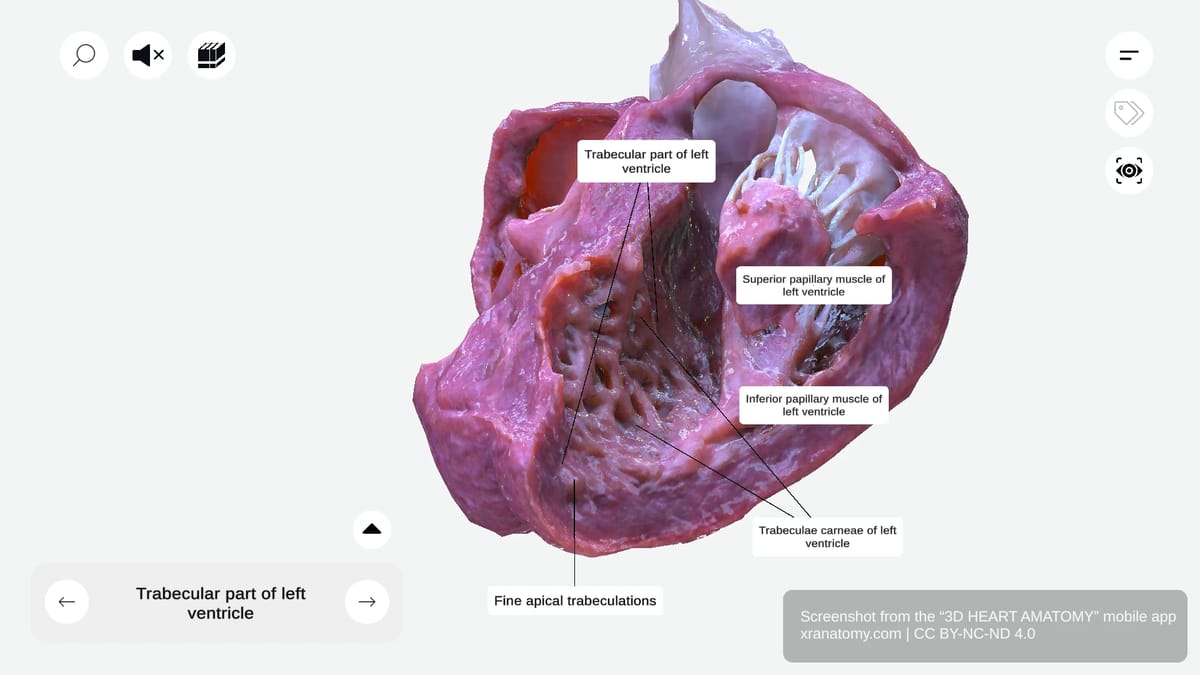
The papillary muscles are muscular projections within the trabecular region. They anchor your mitral valve leaflets via the chordae tendineae, ensure proper mitral valve closure during contraction, and prevent backflow into your left atrium. The left ventricle has two prominent papillary muscles: the superior papillary muscle and the inferior papillary muscle.
Superior Papillary Muscle
The superior papillary muscle, also called the anterior papillary muscle, is the larger of the two. It originates from the lateral wall of the left ventricle.
Inferior Papillary Muscle
The inferior papillary muscle, also called the posterior papillary muscle, is the smaller of the two. It arises from the posteromedial wall of your left ventricle.
Papillary Muscle Function
Both papillary muscles are essential for mitral valve integrity during your cardiac cycle.
CHORDAE TENDINEAE OF LEFT VENTRICLE
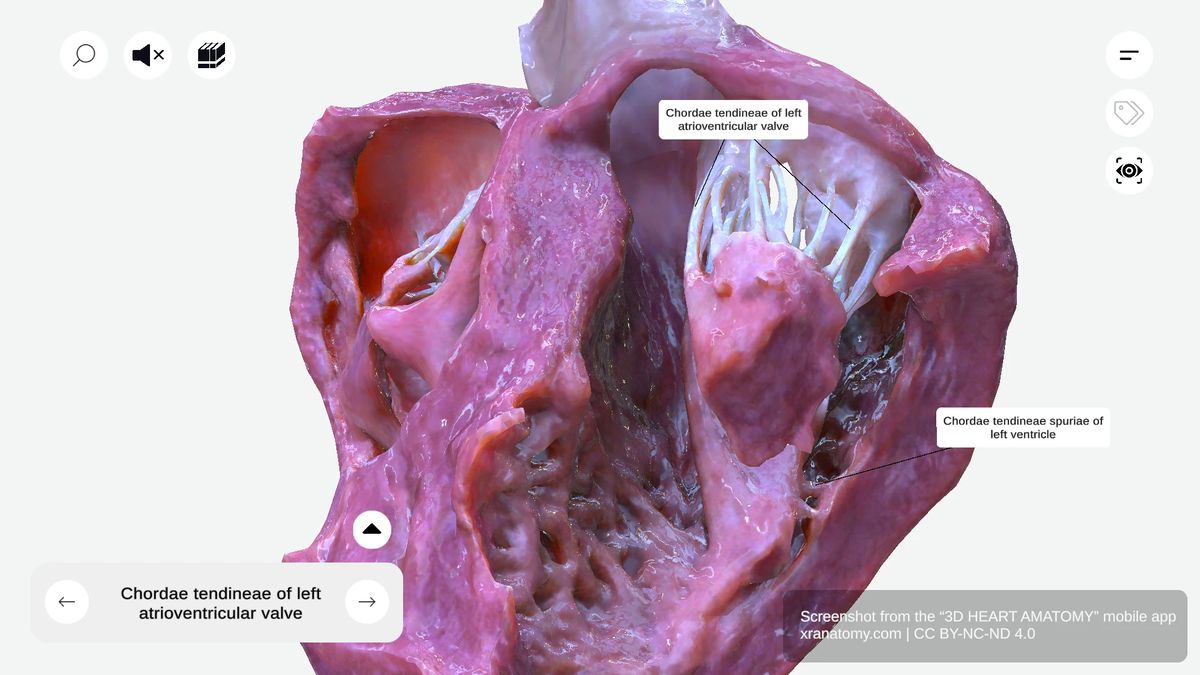
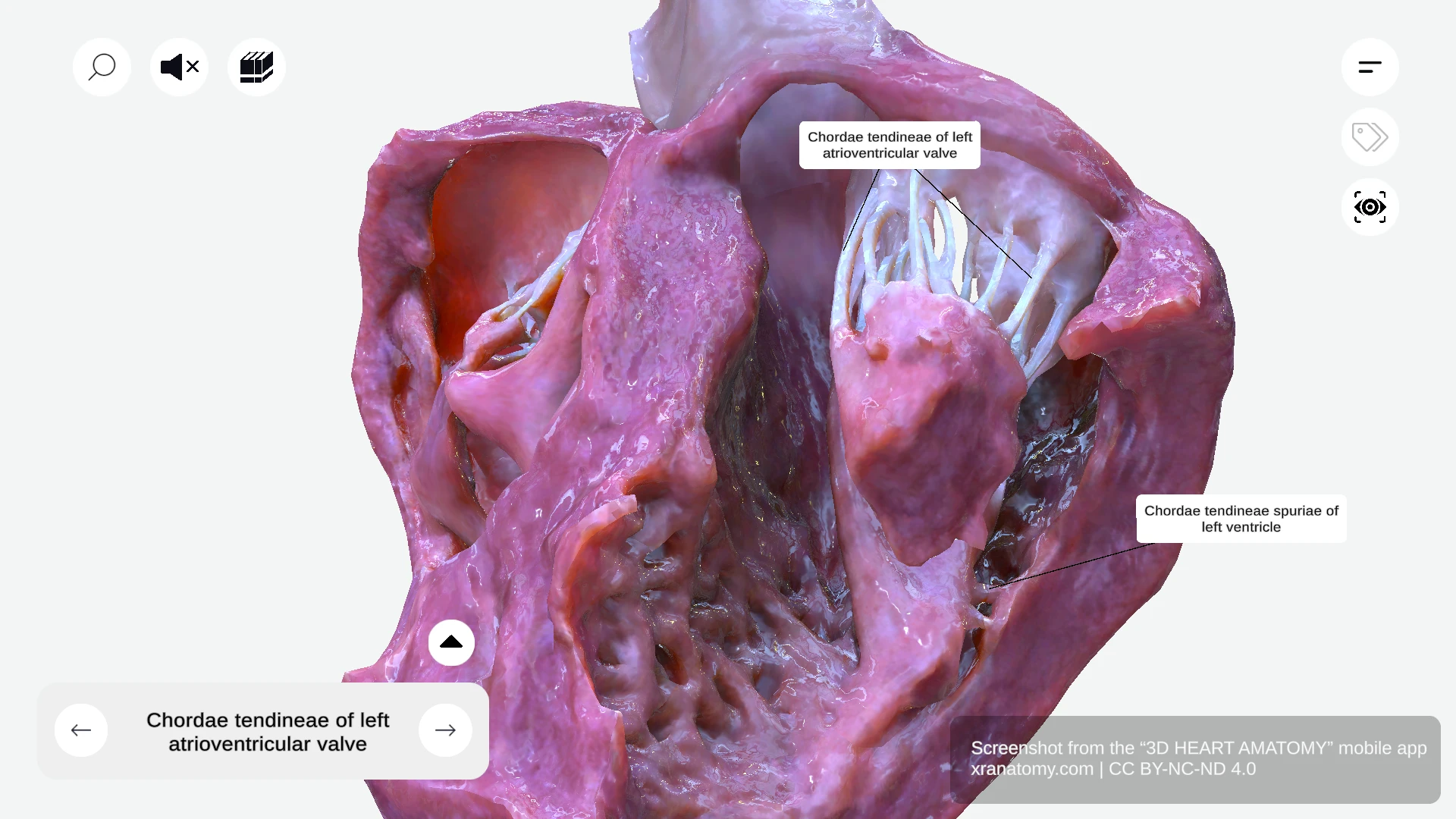
The chordae tendineae are thin, strong fibrous cords and essential components of your valvular apparatus. They connect your papillary muscles to the valve leaflets, attaching to the mitral valve cusps. They prevent leaflet prolapse into your left atrium during contraction, ensure secure valve closure, and maintain efficient unidirectional blood flow. A variant called the chordae tendineae spuriae also exists within the ventricle.
Chordae Tendineae Spuriae
The chordae tendineae spuriae are false chordae that do not attach to valve leaflets. They may span between ventricular walls or connect between papillary muscles.
CHECK YOUR UNDERSTANDING
1. What structure guards the inlet of the left ventricle, and what is its function?
Reveal Answer
The mitral valve (also called the left atrioventricular valve) guards the inlet. It ensures unidirectional blood flow and prevents backflow during ventricular contraction.
2. Name the two papillary muscles of the left ventricle and state which is larger.
Reveal Answer
The superior (anterior) papillary muscle and the inferior (posterior) papillary muscle. The superior papillary muscle is the larger of the two.
3. What is the aortic vestibule and what role does it play?
Reveal Answer
The aortic vestibule is a smooth-walled portion of the left ventricle below the aortic orifice. It leads up to the aortic valve, streamlines blood flow from the ventricle into the aorta, reduces turbulence, and enhances efficiency of blood ejection into systemic circulation.
WHAT'S NEXT
Now that you understand the left ventricle, the next page covers the Cardiac Vessels. You will explore the coronary arteries, cardiac veins, and coronary sinus that supply oxygen and nutrients to your heart muscle.
Review this page again in 3 days to reinforce what you have learned.
BIBLIOGRAPHY
1. Gray H, Lewis W. Angiology. In: Anatomy of the Human Body. 1918. p. 526–542.
2. Gosling JA, Harris PF, Humpherson JR, Whitmore I, Willan PLT. Human anatomy: color atlas and textbook. 6th ed. 2017. 45–58 p.
3. Anderson RH, Spicer DE, Hlavacek AM, Cook AC, Backer CL. (2013). Anatomy of the cardiac chambers. In Wilcox’s Surgical Anatomy of the Heart (4th ed., pp. 13–50). Cambridge University Press.
4. Fritsch H, Kuehnel W. Color Atlas of Human Anatomy. Vol. Volume 2, Color Atlas and Textbook of Human Anatomy. 2005. 10–42 p.
5. Moore K, Dalley A, Agur A. Clinically Oriented Anatomy. Vol. 7ed, Clinically Oriented Anatomy. 2014. 132–151 p.
6. Ho SYen. Anatomy for Cardiac Electrophysiologists: A Practical Handbook. Cardiotext Pub; 2012. 5–27 p.
7. Standring S, editor. Gray's Anatomy: The Anatomical Basis of Clinical Practice. 41st ed. London: Elsevier; 2016.
8. Moore KL, Agur AMR, Dalley AF. Essential Clinical Anatomy. 5th ed. Philadelphia: Wolters Kluwer; 2015.